

Bonding & Jointing Techniques
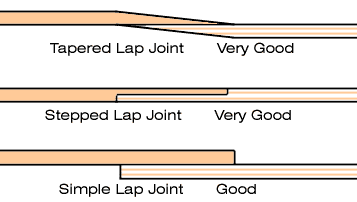
The three main types of bonded joint are tapered lap joint, stepped lap joint & simple lap joint. Various types of polymer adhesives may be suitable for the bonding of cured polymer composite laminates, including polyester, epoxy & vinylester. ReVerie Parts including flat sheet, angle and sandwich panels, are generally made using epoxy polymer resins (pre-preg). For bonding epoxies we recommend using structural epoxies. For a high temperature resistant bond use 3M DP760 & for a service temperature of up to 90°c max use DP490. Methacrylates may also be used to bond cured epoxy laminates.
Careful surface preparation is essential to ensure bond strength. Preparation and application should be performed in a clean and ideally temperature controlled environment (consult adhesive datasheet). The bonding surfaces should be abraded first with 80 grit sandpaper or 3M roloc discs (wear ear, eye & fine filtered dust mask protection).
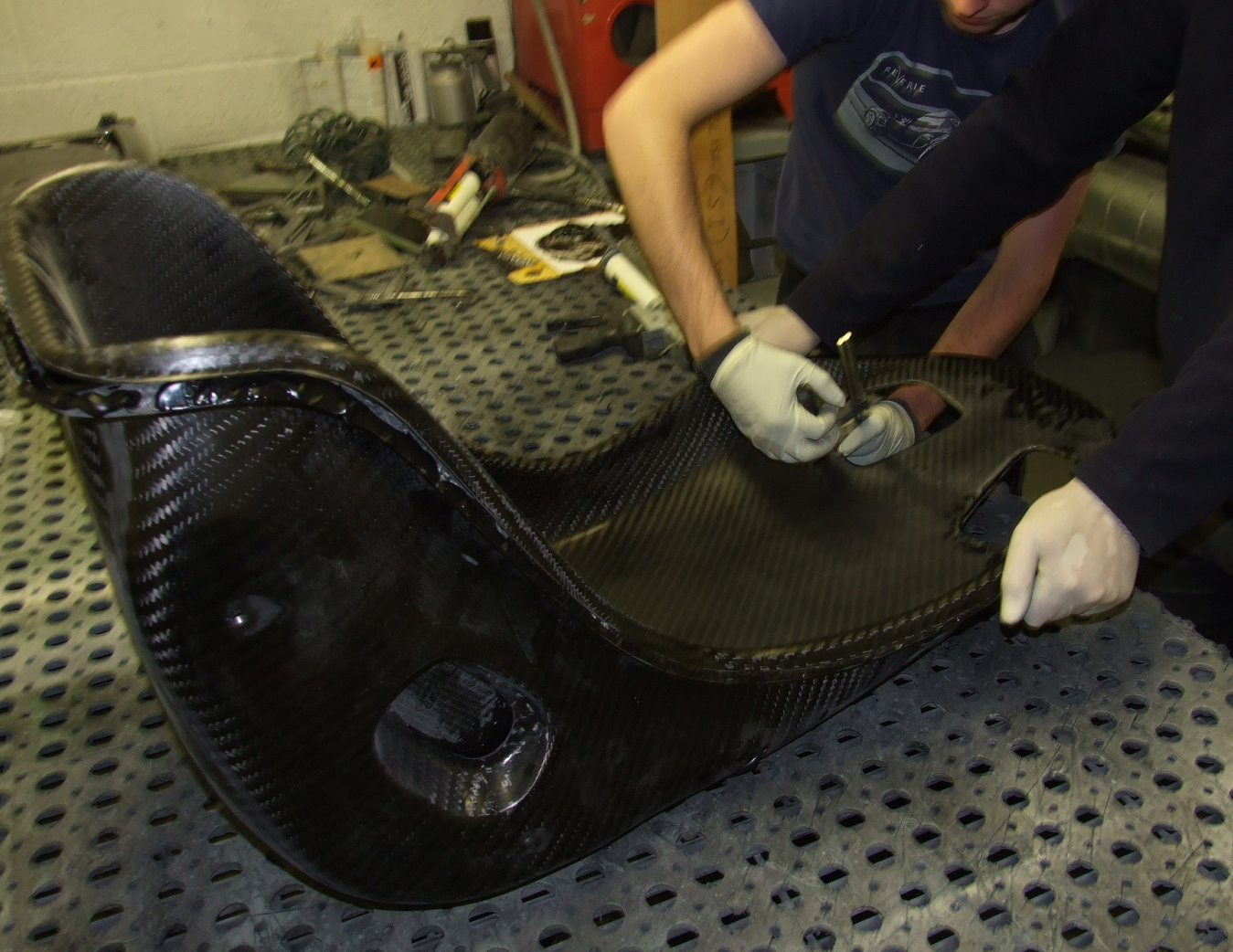
The following options are used for clamping the components whilst the adhesive cures:
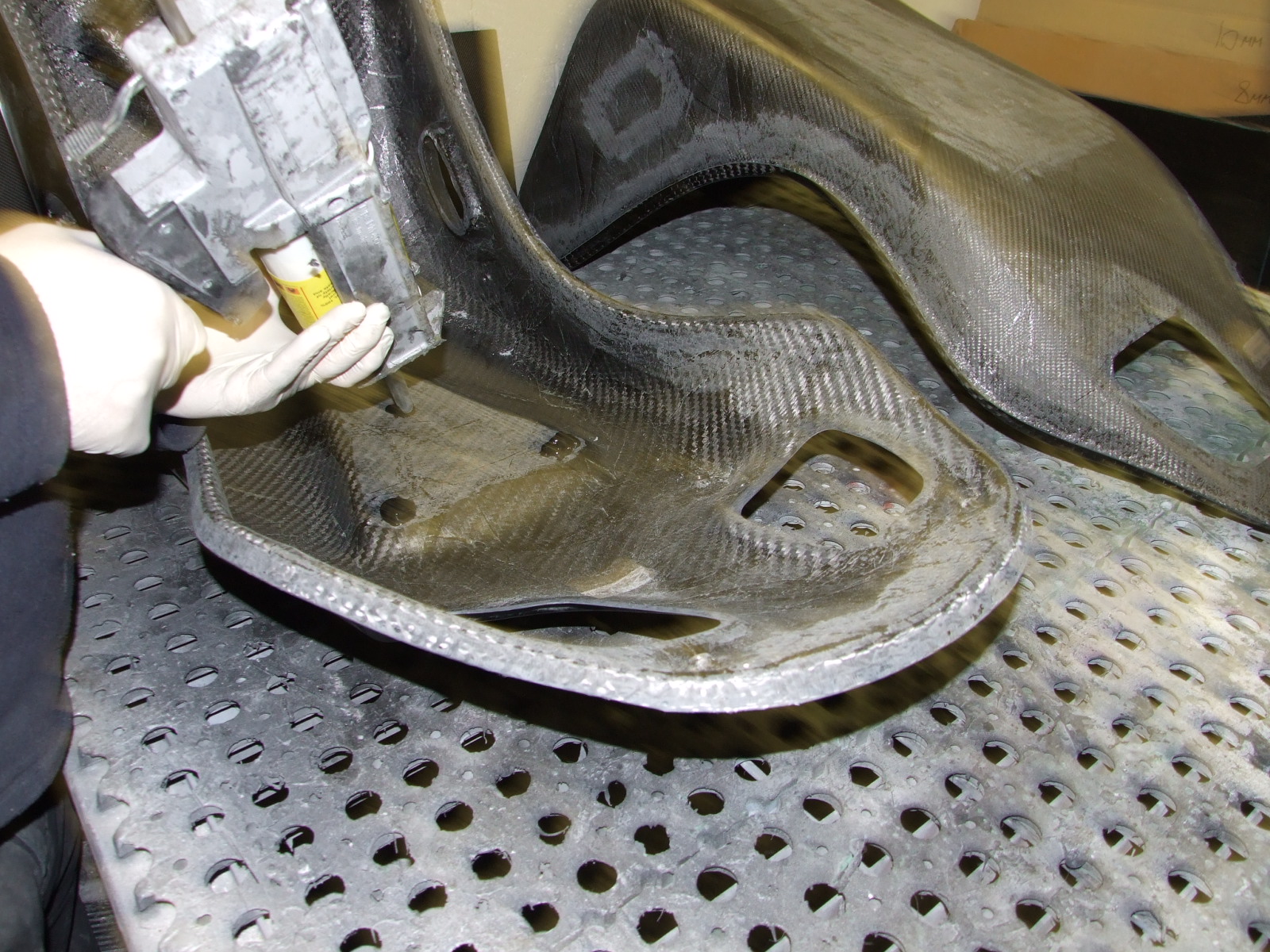
Skin Pins:
Provides an excellent means of clamping requiring only a small 2.5mm hole to be drilled through both skins. The skin pins (having had an application of Simonz XCar wax) can be removed once bonding complete.
Rivets:
Ideally use stainless steel rivets or alloy/steel powder coated rivets to stop galvanic corrosion between the carbon and alloy or steel.
The rivets can be left in place to add mechanical fixing to the bonded joint, or can be removed by drilling out once the adhesive has fully cured.
Clamps:
Use of G-Clamps, clamping pressure applied via weights or vacuum bagging to hold the bonded components together during curing.